
Easter story by Pierre de Coubertin
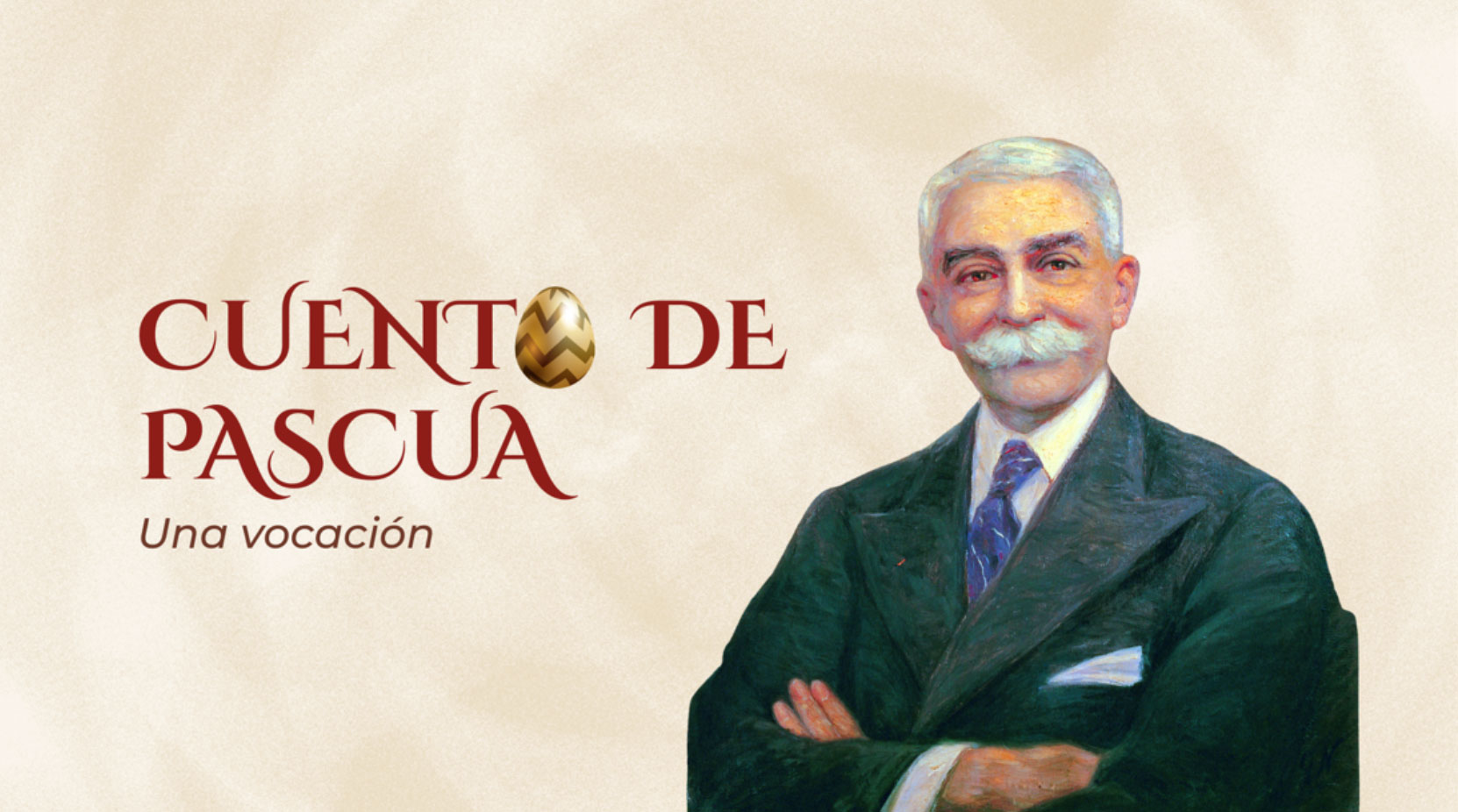
The Latin American Center for Coubertinian Studies presents to the public the only Easter story written by Pierre de Coubertin, published in the Revue Olympique, year 12, April 1912, pp. 56–58.
The work, which until now was only available in French, brings back the values of self-improvement, solidarity, and love for sport, conveyed by Coubertin in a setting where tradition and modernity meet. The translation, carefully carried out to preserve the original message, is aimed at readers and sports enthusiasts who wish to discover more details about Coubertin’s work. This translation is part of a broader effort by the Latin American Center for Coubertinian Studies to spread Coubertin’s legacy and encourage the practice of sport.
A Vocation
The old church and the young gymnasium stood side by side in a striking contrast. Never had that contrast seemed more interesting than on that morning. Jean remarked on it, leaning—out of breath—against one of the uprights of the horizontal bar, where he had just successfully completed several movements in which he had previously failed. He felt a kind of intense physical joy. And just at that moment, from the nearby Gothic tower, the powerful sounds of the bells fell into the great silence. It was Holy Saturday. The school was on holiday, and so was the gymnastics society. The gymnasium would have remained asleep if not for Jean’s zeal: being a friend of the old caretaker, he had obtained the key from him to work there alone, in his own way, without instructor or companions. His dream, precisely! And finally having realized it, having that beautiful, clean, varnished hall all to himself—flooded with light and filled with apparatus symbolizing strength and agility, speaking of health, youth, and the future—filled his soul with joy. A springtime tumult stirred within him, and the whole world seemed painted in pink and blue tones.
Through the large, modern, bulging windows of the gymnasium, which pierced the light walls abundantly, appeared the delicate complexity of the church: its jagged apse where birds nested, the long moss-covered gargoyles, the solid flying buttresses, and the carved spires—this whole world of old cathedrals in which the fervent and somewhat restless piety of past centuries had been expressed. Jean, who had just devoted himself with springlike vigor to the parallel bars, once again admired that incomparable architecture. The beauty of the ancient building and the comfort of the modern one captivated him: he loved his era.
To move more freely, that morning he wore his torso and legs bare. A simple pair of very short flannel shorts, so light that he barely felt them, made up his entire outfit. Those shorts had been made according to his refined specifications, so that they would fall midway between those worn by gymnasts, which are too tight, and those worn by runners, which are too loose. Jean was delighted with everything about that day; but truly, he could not imagine a more pleasant and perfect sporting garment. And suddenly, the figure of the seamstress who had cut and sewn that masterpiece came to his mind. She worked by the day at Jean’s mother’s house. She was a poor, anemic girl like all her family: a large household that had almost equally lacked sufficient food and fresh air. Jean had sometimes glimpsed the young woman’s little siblings—charming children without hereditary defects who, with just a little, could have grown strong, and who would instead remain weak…
A great compassion overcame him at the thought that those boys, and so many others like them, were deprived of sport, deprived of gymnastics, deprived of all the muscular joys through which the adolescent feels, so to speak, a beneficent strength entering his limbs and developing them. Yet there was nothing superfluous or luxurious in most of those pleasures. Even rowing could be a popular sport. What would be needed for that? A boat and a piece of shelter. And for running, for cross-country events? Even less. And for football? A field.
Do municipalities, which spend so much on “public services” whose importance is often relative, then forget this one—the most essential of all? Jean, reflecting on these things for the first time, could hardly believe it. He felt the soul of an apostle within him, and the ardor of a Peter the Hermit to preach the new crusade. Everywhere, municipalities would be obliged by law to maintain large fields with the necessary equipment and a competent instructor responsible for organizing sports, teaching them, and supervising them. Thousands of good coarse wool jerseys would be produced and sold at cost price. Simple wooden gymnasiums with corrugated iron roofs would be built.
My God, how many things could be done with a little money and goodwill! No one had thought of it until then. —What? Among all those men, all those young people who love sport and practice it regularly, had no one yet thought of sharing this recipe for life, this source of wholesome joy, with the underprivileged? Well then, Jean would take charge of it. It was decided. Starting tomorrow, he would begin the campaign; he would gather subscriptions, write articles in the newspapers. And happy with these humanitarian and generous prospects—perhaps without realizing that they also appealed to him because they would give him an opportunity to frequent gyms and playing fields a little more than his family would have liked—Jean climbs nimbly up the smooth rope, while from the top of the Gothic tower the Easter bells, the bells of the Resurrection, ring out in full peal.
COUBERTIN, Pierre. Une vocation. Conte de Pâques. [A Vocation. An Easter Story.] In: Revue Olympique, 12th year, April 1912, pp. 56–58.
By comparing the message of the story with the modern Olympic Games, one can see that the ideals immortalized by Pierre de Coubertin—the constant pursuit of excellence, the spirit of unity, and the democratization of sport—remain alive on the global stage. The story celebrates the awakening of a passion, emphasizing the importance of providing access to sport for all, while the modern Olympic Games continue firmly in their mission to unite cultures, promote ethics, and encourage social inclusion. Just as Coubertin dreamed of public spaces that would foster sports practice and well-being, today’s Olympic competitions reflect that vision—not only through great athletic performances, but also through initiatives that integrate communities and promote human development.
The Latin American Center for Coubertinian Studies wishes everyone a happy Easter, filled with health, peace, and the warmth of achievements that inspire us, together, to keep transforming the world through sport.
El Centro Latinoamericano de Estudios Coubertinianos presenta al público el único cuento de Pascua escrito por Pierre de Coubertin, publicado en la Revue Olympique, año 12, abril de 1912, pp. 56-58.
La obra, que hasta entonces solo estaba disponible en francés, rescata los valores de superación, solidaridad y amor por el deporte, transmitidos por Coubertin en un escenario donde la tradición y la modernidad se encuentran. La traducción, realizada con cuidado para mantener el mensaje original, se dirige a lectores y entusiastas del deporte que buscan descubrir más detalles sobre la obra de Coubertin. Esta traducción forma parte de un esfuerzo mayor del Centro Latinoamericano de Estudios Coubertinianos para difundir el legado de Coubertin e incentivar la práctica deportiva.
Una vocación
La vieja iglesia y el joven gimnasio se alzaban uno junto al otro en un contraste llamativo. Nunca había parecido ese contraste más interesante que aquella mañana. Jean lo comentaba, apoyado, por causa del ahogo, contra uno de los montantes de la barra fija, donde acababa de lograr con éxito varios movimientos en los que hasta entonces había fracasado. Sentía una especie de intensa alegría física. Y justo en ese momento, desde la torre gótica vecina cayeron en el gran silencio los potentes sonidos de las campanas. Era el Sábado Santo. La escuela estaba de vacaciones, y también la sociedad gimnástica. El gimnasio habría dormido de no ser por el celo de Jean, que, amigo del viejo conserje, había conseguido de él la llave para trabajar allí solo, a su modo, sin monitor ni camaradas. ¡Su sueño, precisamente! Y haberlo realizado por fin, tener para sí solo esa hermosa sala limpia y barnizada, inundada de luz y poblada de aparatos que simbolizaban la fuerza y la agilidad, que hablaban de salud, juventud y porvenir, le llenaba el alma de júbilo. Un tumulto primaveral se agitaba en él y el mundo entero se evocaba en tonos rosas y azules.
Por las grandes ventanas del gimnasio, modernas y abultadas, que horadaban abundantemente el ligero muro, aparecía la delicada complejidad de la iglesia, su ábside dentellado donde anidan los pájaros, las largas gárgolas musgosas, los sólidos arbotantes y los chapiteles labrados: todo ese mundo de las viejas catedrales en el que se expresó la piedad ardiente y un poco inquieta de los siglos anteriores. Jean, que acababa de dedicarse con vigor primaveral a las barras paralelas, admiró de nuevo aquella arquitectura incomparable. La belleza del edificio antiguo y el confort del edificio reciente lo cautivaron: amó su época.
Para tener mayor libertad de movimientos, aquella mañana llevaba el torso y las piernas desnudos. Un simple pantalón corto de franela, muy breve y tan ligero que apenas lo sentía sobre sí, formaba todo su atuendo. Ese pantalón corto había sido confeccionado según sus indicaciones de sibarita, de modo que se mantuviera a medio camino entre los que, demasiado ceñidos, llevan los gimnastas y los que, demasiado holgados, usan los corredores. Jean estaba encantado con todo aquel día; pero, de veras, no podía imaginarse una prenda deportiva más agradable y perfecta. Y de pronto acudió a su memoria la figura de la obrera que había cortado y cosido aquella obra maestra. Ella venía por jornadas a casa de la madre de Jean. Era una pobre muchacha anémica como todos los suyos: una familia numerosa a la que casi por igual le habían faltado una alimentación suficiente y el aire puro. Jean había entrevisto a veces a los hermanitos de la joven, niños encantadores sin taras hereditarias que, con poco, habrían podido hacerse fuertes y que seguirían siendo débiles….
Una gran compasión le invadió al pensar que esos muchachos y tantos otros con ellos estaban privados del deporte, privados de la gimnasia, privados de todas las alegrías musculares por las cuales el adolescente siente, por así decirlo, penetrar en sus miembros la fuerza bienhechora y desarrollarlos. Sin embargo, no había nada superfluo, nada lujoso, en la mayor parte de esos placeres. Incluso el remo podría ser un deporte popular. ¿Qué haría falta para ello? Un barco y un trozo de garaje. ¿Y para las carreras a pie, las pruebas de campo a través?… aún menos. ¿Y para el fútbol? Un campo de juego.
¿Las municipalidades que gastan tanto en «servicios públicos», cuya importancia a menudo es relativa, olvidan, pues, aquel, el más esencial de todos? Jean, que reflexionaba por primera vez sobre estas cosas, no daba crédito. Sintió tener alma de apóstol y el ardor de un Pedro el Ermitaño para predicar la nueva cruzada. En todas partes, los municipios estarían obligados por ley a mantener grandes praderas con el material de juego necesario y un maestro competente encargado de organizar los deportes, enseñarlos y vigilarlos. Se fabricarían por millares buenas camisetas de lana basta que se venderían al precio de costo. Se construirían gimnasios rudimentarios de madera blanca con techos de chapa ondulada.
¡Dios mío, cuántas cosas se harían con un poco de dinero y buena voluntad! Nadie había pensado en ello hasta entonces. — ¿Cómo? ¿Entre todos esos hombres, todos esos jóvenes que aman el deporte, que lo practican regularmente, nadie había tenido aún la idea de compartir esa receta de vida, esa fuente de sanas alegrías, con los desheredados? Pues bien, Jean se encargaría de eso. Está decidido. Desde mañana se pondrá en campaña; reunirá suscripciones, escribirá artículos en los periódicos. Y feliz por esas perspectivas humanitarias y generosas —sin darse quizá cuenta de que también le sonreían porque le darían ocasión de frecuentar los gimnasios y los campos de juego un poco más de lo que su familia desearía— Jean trepa, ágil, a la cuerda lisa, mientras repican a todo vuelo, desde lo alto de la torre gótica, las campanas de Pascua, las campanas de la Resurrección.
COUBERTIN, Pierre. Une vocation. Conte de Pâques. [A Vocation. An Easter Story.] In: Revue Olympique, 12e année, avril 1912, pp.56-58.
Al comparar el mensaje del cuento con los Juegos Olímpicos modernos, se observa que los ideales inmortalizados por Coubertin – la búsqueda incesante de la excelencia, el espíritu de unión y la democratización del deporte – siguen vivos en el escenario global. El cuento celebra el despertar de una pasión, subrayando la importancia de brindar acceso al deporte para todos, mientras que los Juegos Olímpicos modernos continúan firmes en la misión de unir culturas, promover la ética e incentivar la inclusión social. Así como Coubertin soñó con espacios públicos que fomentaran la práctica deportiva y el bienestar, las actuales competiciones olímpicas reflejan esa visión, no solo a través de grandes desempeños atléticos, sino también mediante iniciativas que integran comunidades e impulsan el desarrollo humano.
El Centro Latinoamericano de Estudios Coubertinianos desea a todos una feliz Pascua, llena de salud, paz y el calor de los logros que, juntos, nos inspiran a seguir transformando el mundo a través del deporte.