The de Coubertin family
Elaborated by Yvan de Navacelle de Coubertin
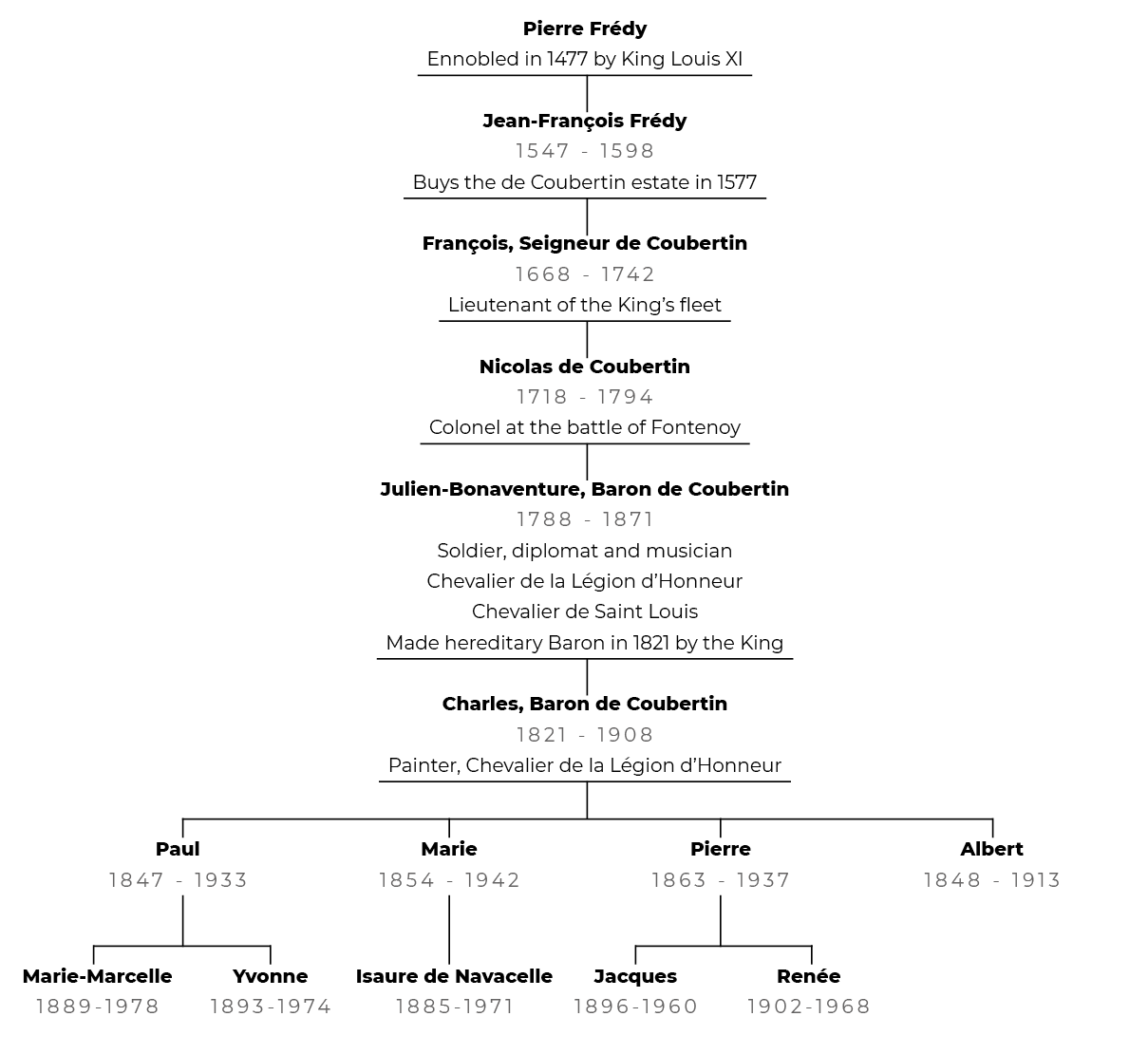
The de Coubertin family can be traced back to the 15th century. In 1506, the ancestor Felice de Fredi discovered the famous Laocoon group in his vineyard near Rome. Since the 17th century, the family has lived in the Chateau de Coubertin near Paris, in which today the de Coubertin Foundation with a professional school for arts and crafts is housed.
Julien Bonaventure de Coubertin
1788 — 1871
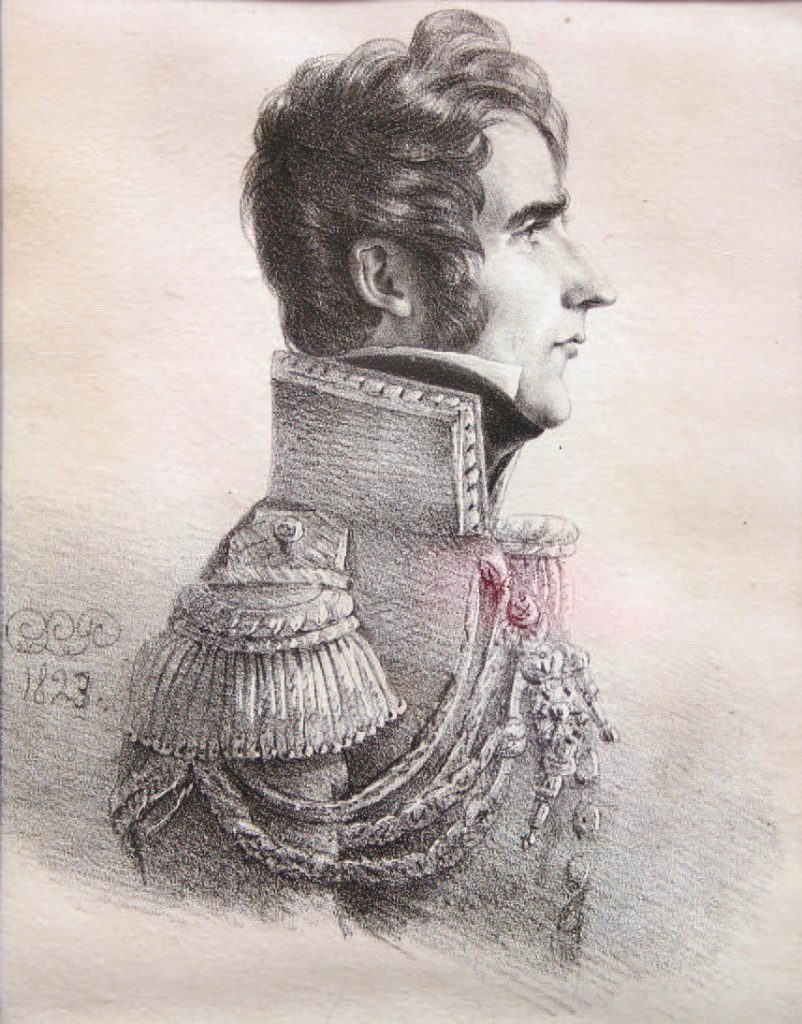
The first artist known to us in the de Coubertin family was Julien Bonaventure de Coubertin (1788 to 1871), a draughtsman, watercolour painter and also an excellent violin player. As a regular officer, Julien Bonaventure de Coubertin was already a Knight of the Legion of Honour at 26. It is thanks to Napoleon’s victories that Julien Bonaventure de Coubertin became, for a short time, Consul in Cuxhaven and later Deputy Prefect
(Souspréfet) in Oldenburg. In 1816, under Louis XVIII, he became Goodwill Ambassador at the newly founded embassy in Rio de Janeiro. His task there was, among others, to support a Royal Academy of Fine Arts. Thus, artists, architects and scientists in Bonapartist circles arrived at the Copacabana. Of all people, Dom João VI, Portuguese king, who had fled from the Napoleonic troops to Rio de Janeiro, founded this academy in Brazil.
Charles-Edouard Le Prince (Baron de Crespy)
Julien Bonaventure de Coubertin /// 1823
Drawing in Indian Ink and Charcoal
13x16cm
Collection: Yvan de Navacelle de Coubertin
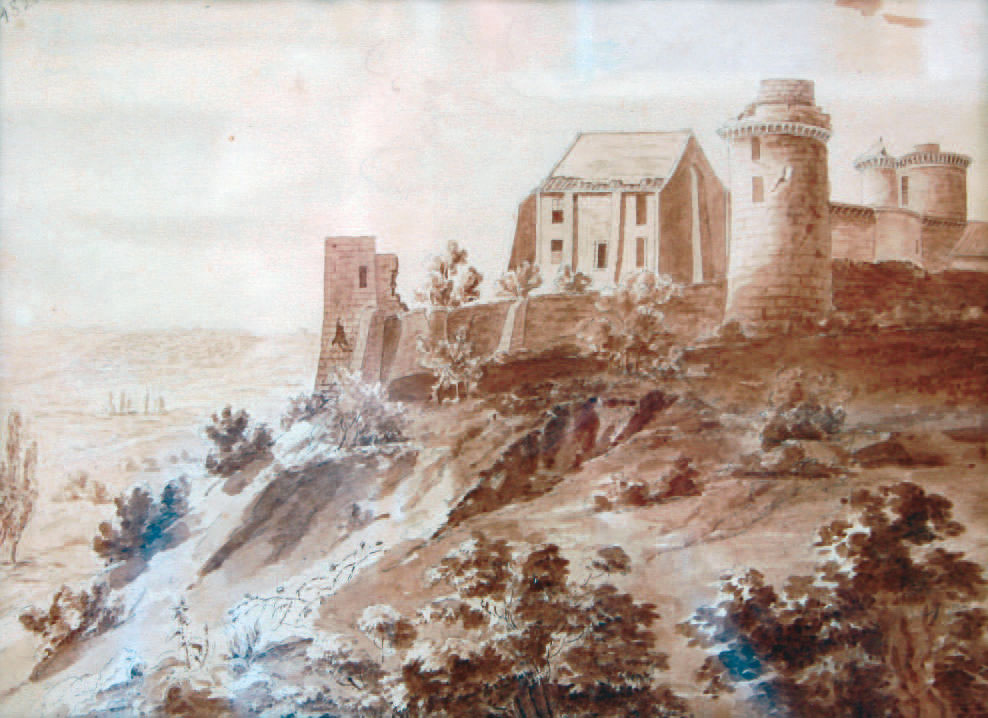
Ruines du Château de Chevreuse
Julien Bonaventure de Coubertin /// 1820
26,5x19,5cm
Collection: Yvan de Navacelle de Coubertin
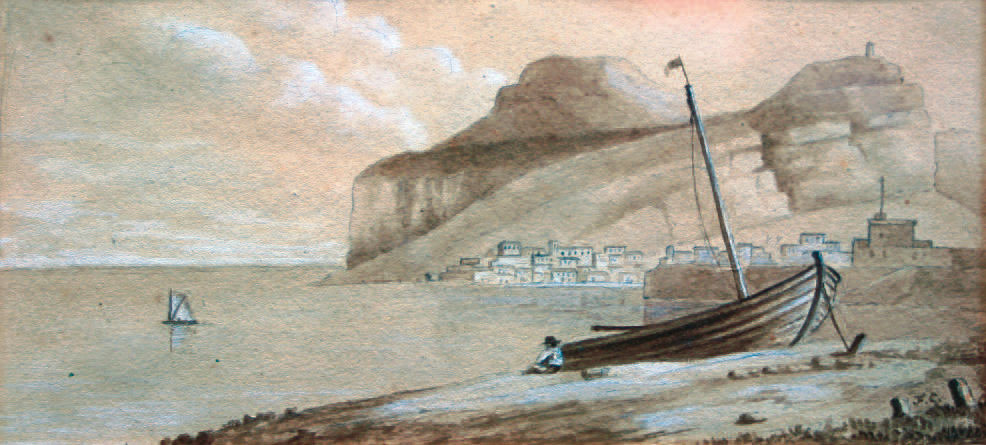
Untitled
Julien Bonaventure de Coubertin /// 1820
Indian Ink Drawing
15,5x7cm
Collection: Yvan de Navacelle de Coubertin
Charles de Coubertin
1821 — 1908
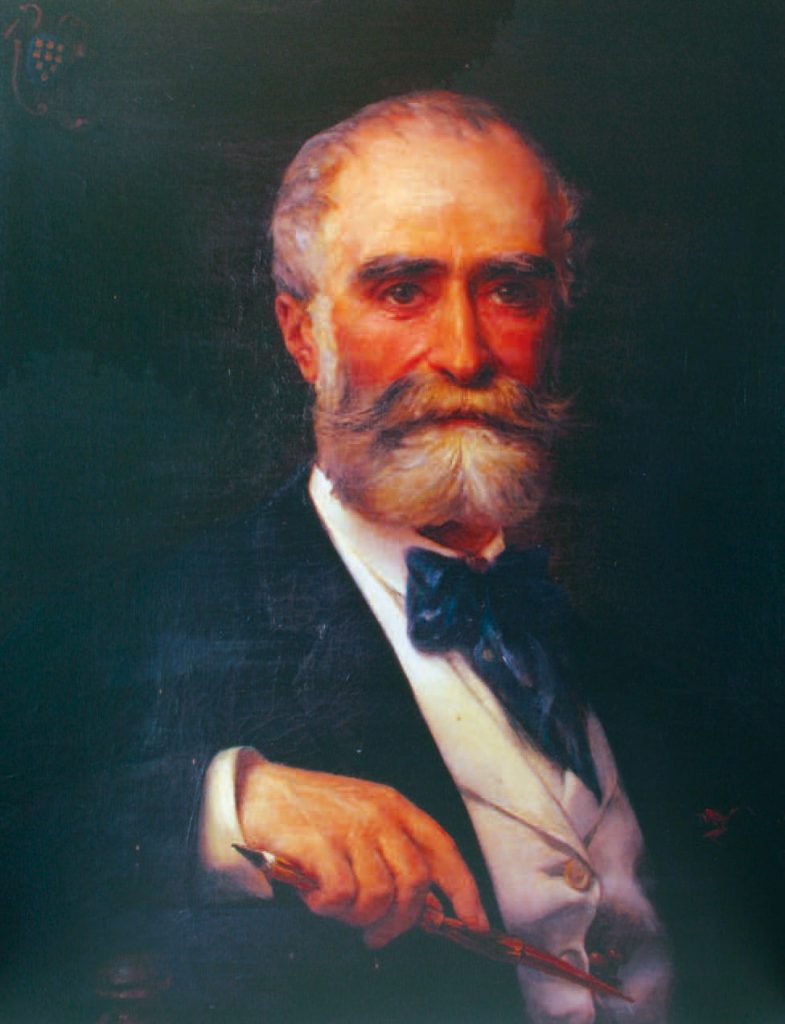
Charles, the father of Pierre de Coubertin, was born in 1822 and died in 1908 in Paris. He was a well-respected genre and church painter, who became known primarily for his large murals in churches and public buildings. In 1848/49, he visited North Africa and the Orient and returned with a range of fresh, almost impressionist watercolours. Later, Charles de Coubertin’s style changed; in particular he interpreted serious religious subjects. For more than 40 years, Charles de Coubertin exhibited in the famous “Salon de Paris” as Superintendent of Fine Arts.
Self-portrait
Charles de Coubertin /// 1878
Oil on Canvas
54x65cm
Collection: Marie-Christine de Navacelle
Charles de Coubertin in his Studio
between 1896 and 1900
22,5x16cm
From the Charles de Coubertin Brochure, no date
Unknown Photographer
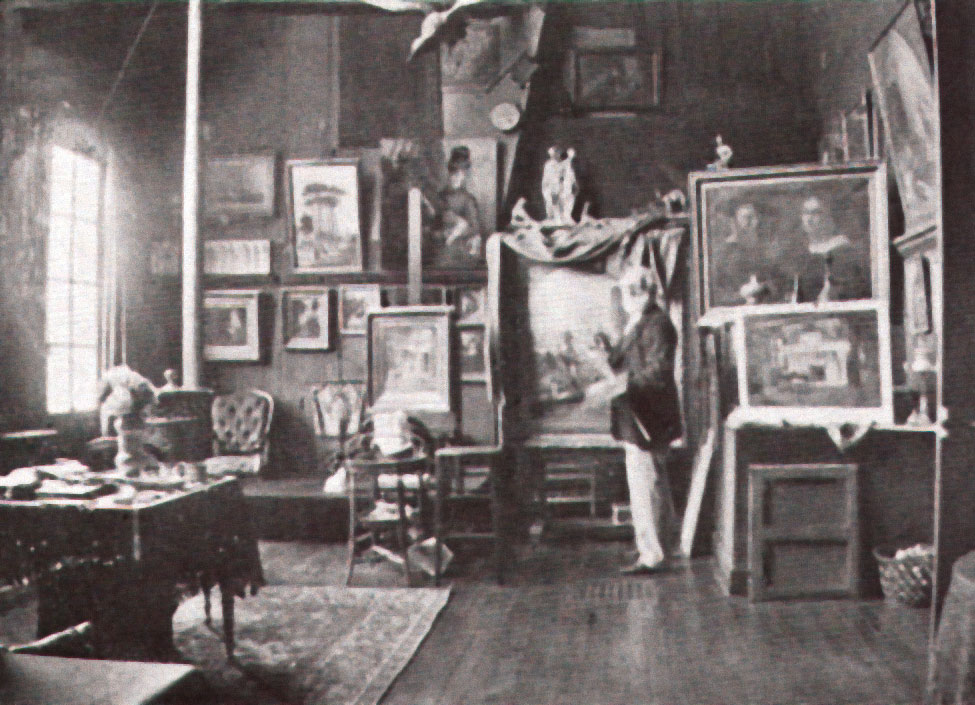
Charles de Coubertin
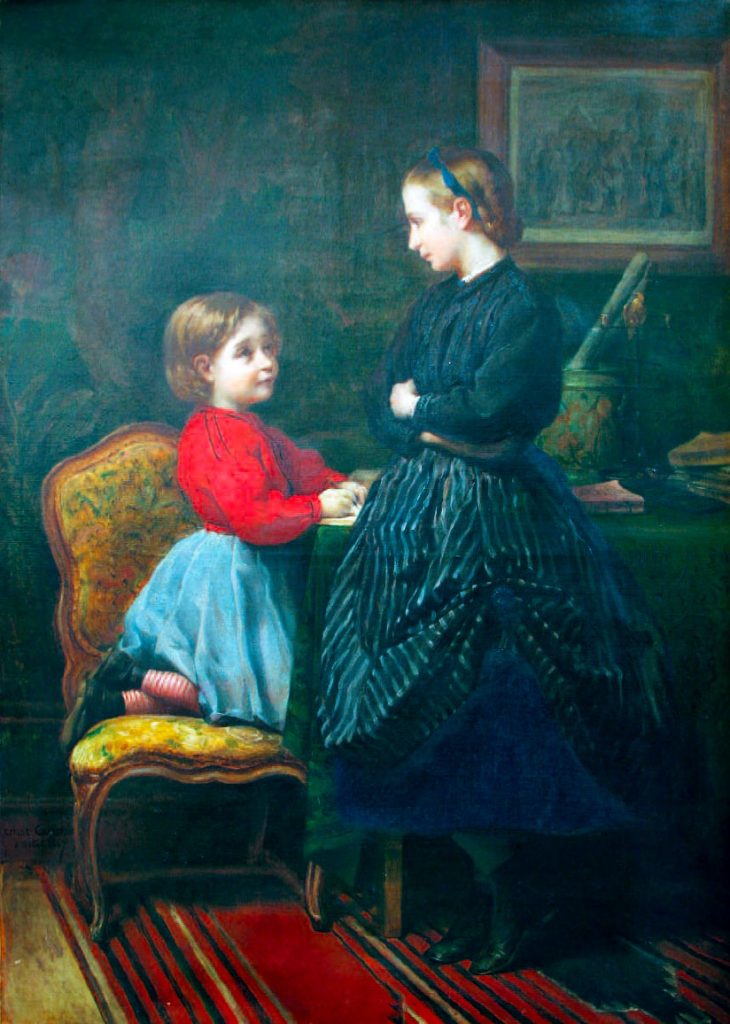
Of particular interest are his personal sketches and paintings of landscapes, especially those of the Normandy, his wife’s homeland, and of Chateau Mirville. There is also a considerable number of portrait sketches of his family, especially of the four children. He sketched his youngest son Pierre many times in his childhood years. Pierre later influenced his father to interpret sporting themes.
Pierre and Marie
Charles de Coubertin /// 1867
Oil on Canvas
82x102cm
Collection: Yvan de Navacelle de Coubertin
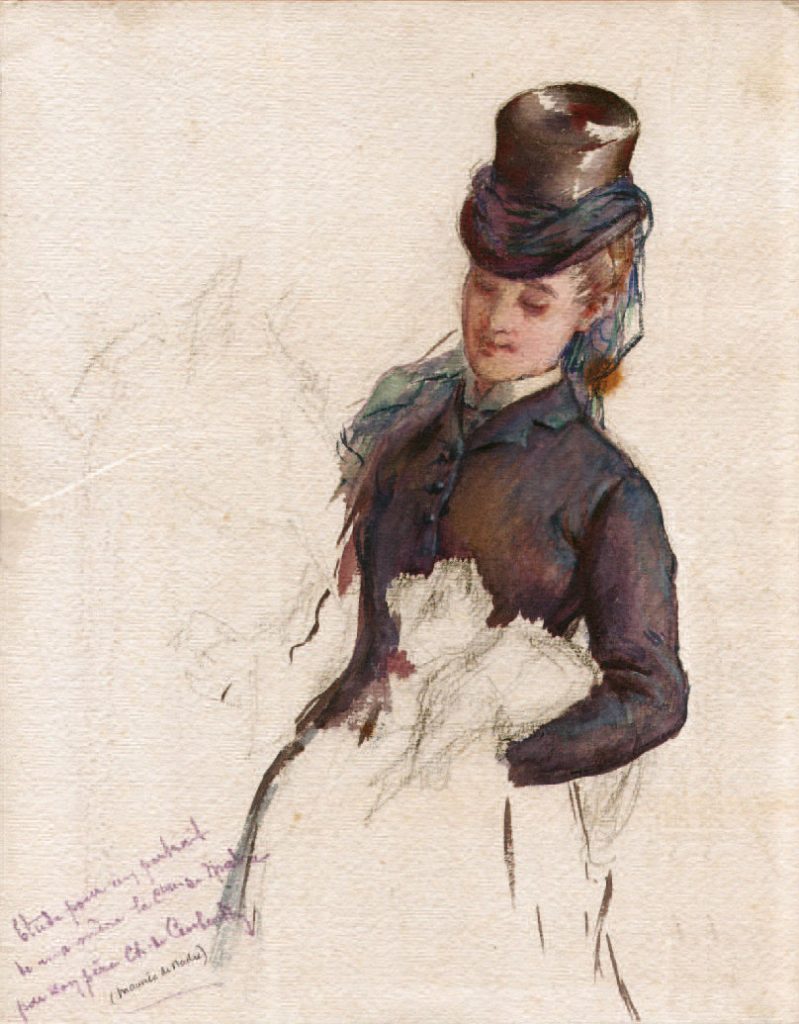
Marie de Coubertin
Charles de Coubertin /// ca. 1875
Watercolour
23x29cm
Collection: Geoffroy de Navacelle de Coubertin
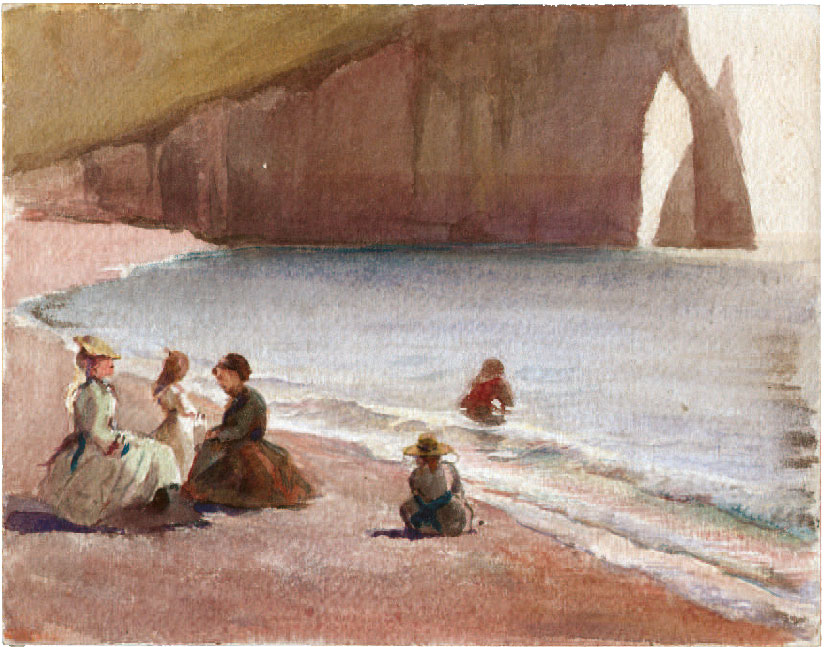
The Coubertins admiring a storm in Etretat
Charles de Coubertin /// 1877
Watercolour
29x22,5cm
Collection: Geoffroy de Navacelle de Coubertin
Charles de Coubertin
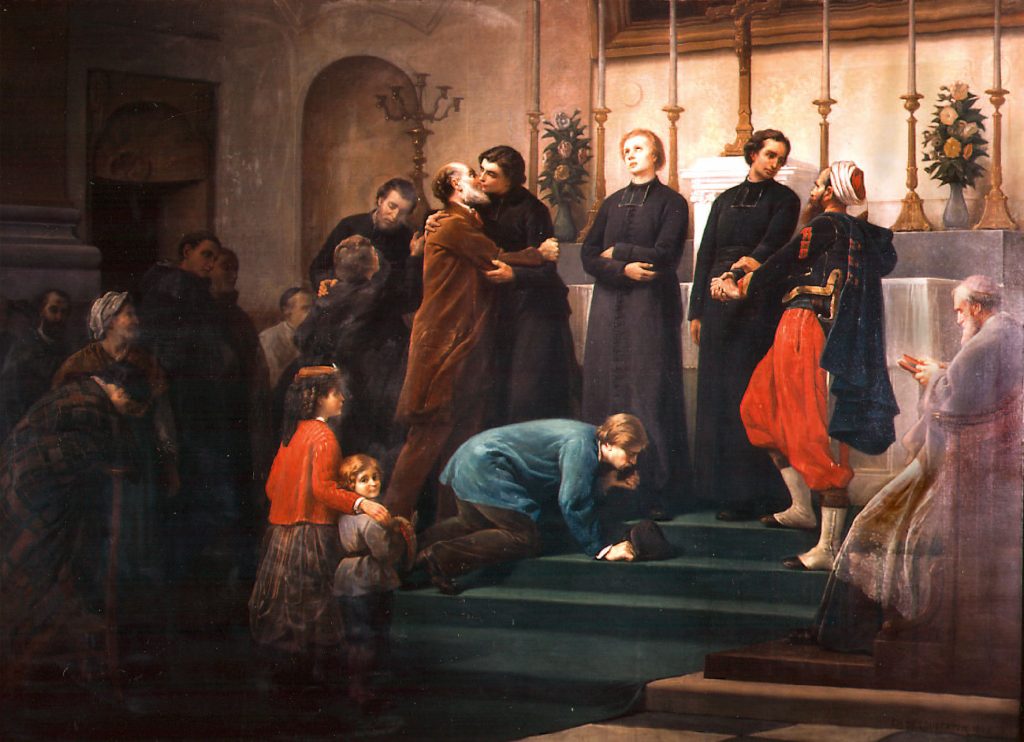
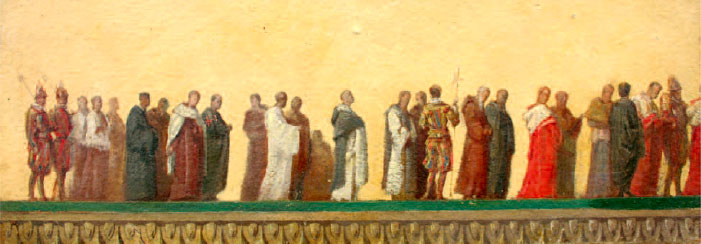
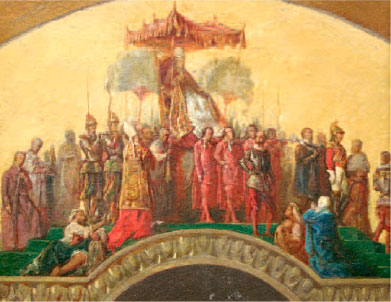
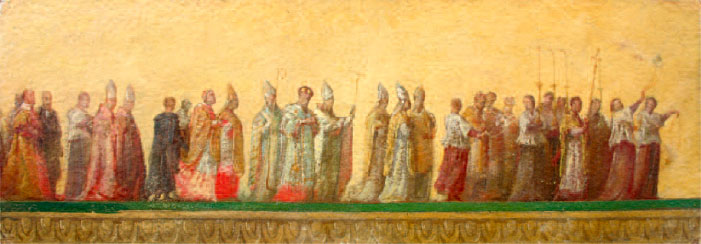
“Le Cortège Pontifical” (1860) and “Le Départ des Missionaires” (1868) are two examples of ca. 100 mu-rals from Charles de Coubertin’s. His major work, “Le Cortège Pontifical” (1860), is in the possession of the Vatican museum. It was commissioned by Pope Pius IX. Charles de Coubertin visited Rome with his wife Ma-rie-Marcelle (née de Grisenoy) and his two sons Albert and Paul, where he was granted an audience with the Pope.
The Departure of the Missionaries
Charles de Coubertin /// 1868
Oil on Canvas
400x289cm
Collection: Church of Missions Etrangères (Rue du Bac) in Paris
The Pontifical Procession
Charles de Coubertin /// 1860
Various Materials
65x23cm/45x36,5cm
Collection: Yvan de Navacelle de Coubertin
Charles de Coubertin
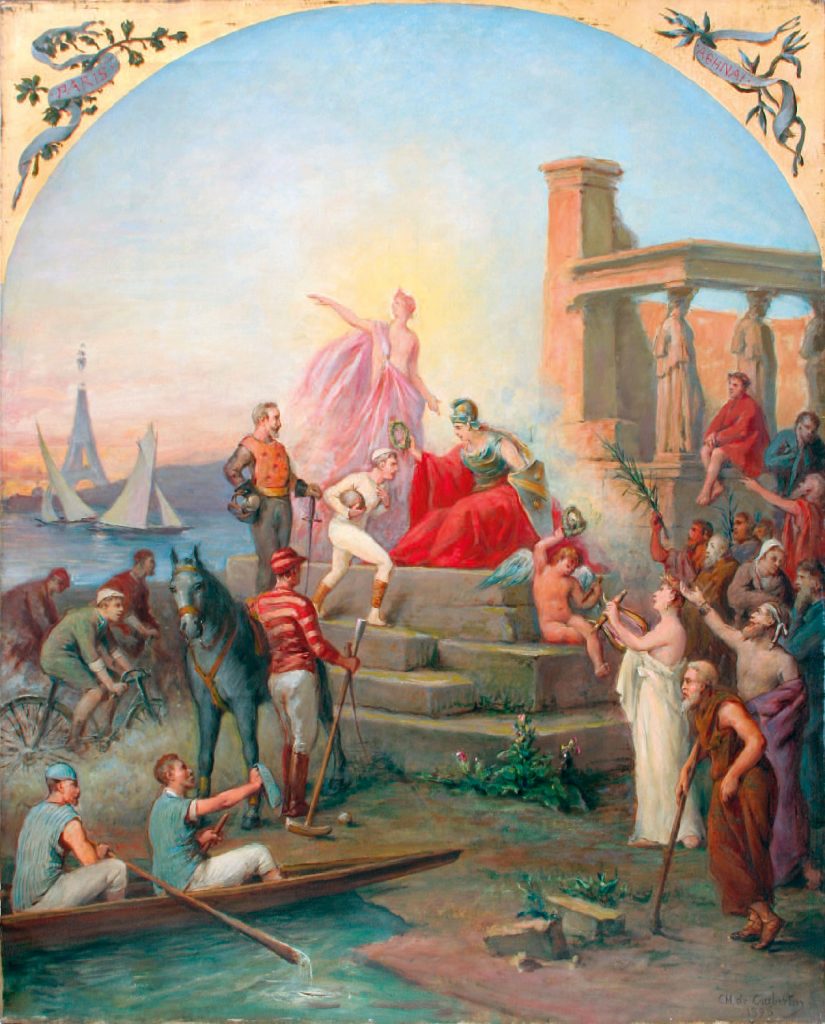
The subject of this painting is the resurrection of the Olympic Games by Pierre de Coubertin, which is being fed from its ancient and French roots. The city goddess Athena is enthroned before the ruins of the Erech-theion, a temple to the mythical founding fathers of venerable Athens. The citizens of Athens have gathered at her feet and beside her. The group is a cryptic re- presentation of ancient Greek culture, in which the competitions played a central social role. Whilst a citizen of antiquity holds up a branch as an ancient Olympic Games symbol of victory, Athena is placing a wreath on the head of a victorious Modern Age ath-lete, probably a rugby player. Here, the subject switch-es from Antiquity to the Modern Age, as behind him stands a fencer. Other types of sport follow, such as cycling, popular in France, rowing and polo. Appar-ently, Pierre de Coubertin regarded this representation as being so apt that he used it as the cover picture for the 1901 to 1914 official IOC magazine, “Revue Olym-pique”.
Reintroduction of the Olympic Games / Allegory of Sports
Charles de Coubertin /// 1896
Oil on Canvas
92,5x111,5cm
Collection: Olympic Museum Lausanne
Pierre de Coubertin
1863 — 1937
Pierre inherited the talents of the artistic de Couber-tin family, which he combined with his philosophic and educational abilities. Pierre de Coubertin also took advantage of his drawing talent not only to personally develop and graphically interpret symbols of the Olym-pic Movement, such as the five Olympic rings, but also to illustrate essays and letters. As the son of a paint-er, who always had Greek antiquity in his mind’s eye, he was forever deeply interested in Fine Arts in all its various forms both in his own works and in the phil-anthropic translation of his ideas. This resulted in the “Marriage of Muscle and Spirit”, the close interrelation-ship between sport and art, promoted by him as early as 1906.
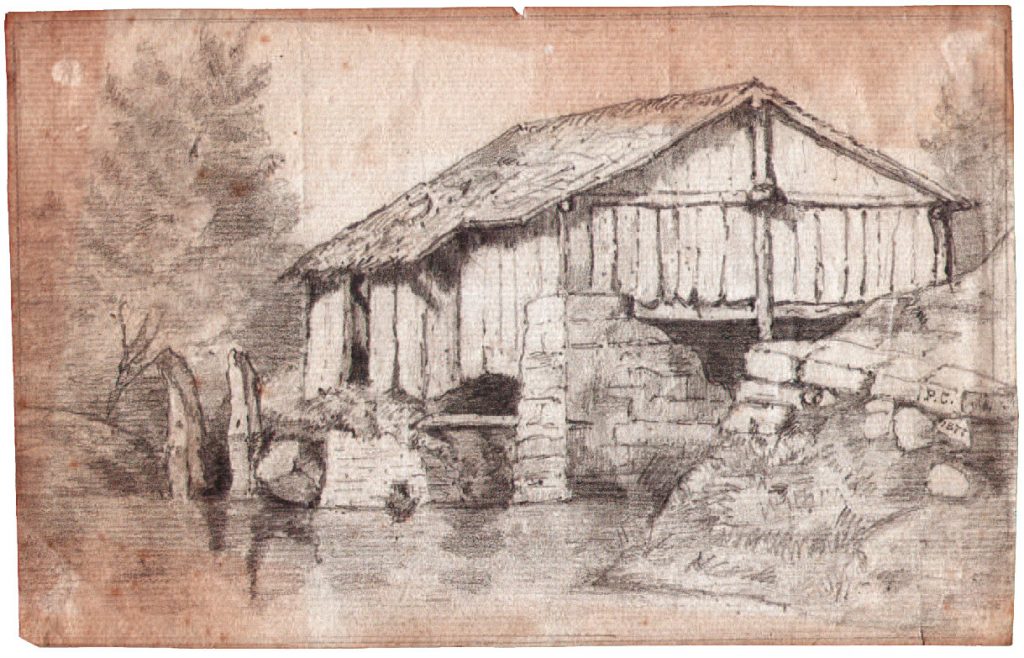
Water Mill
Pierre de Coubertin /// 1877
Sepia Drawing
22x14cm
Collection: Geoffroy de Navacelle de Coubertin
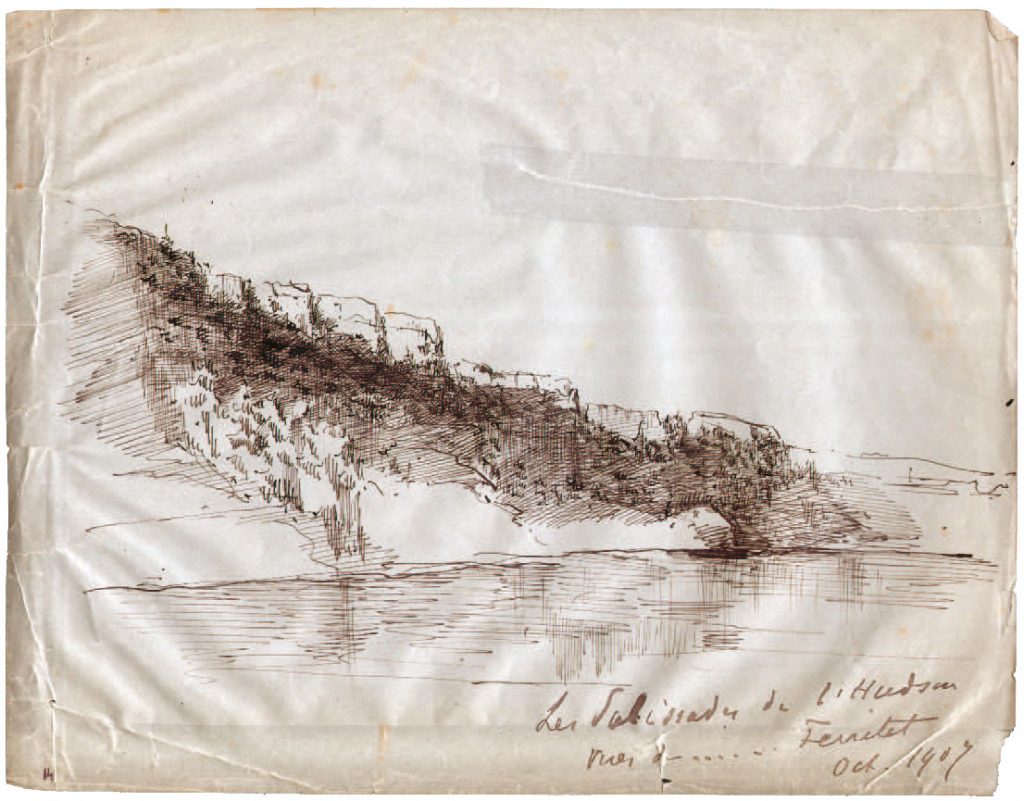
Hudson-Bay
Pierre de Coubertin /// 1907
Pen and Ink Drawing
27x21cm
Collection: Geoffroy de Navacelle de Coubertin